The thermometer on my dashboard said 30 degrees when we pulled into the parking lot at Wheeler National Wildlife Refuge at 7:50 on Saturday morning. Harper, two days past her eleventh birthday, was wearing two pairs of socks and a scarf wrapped around her face so only her eyes showed. She looked like a very small bank robber.
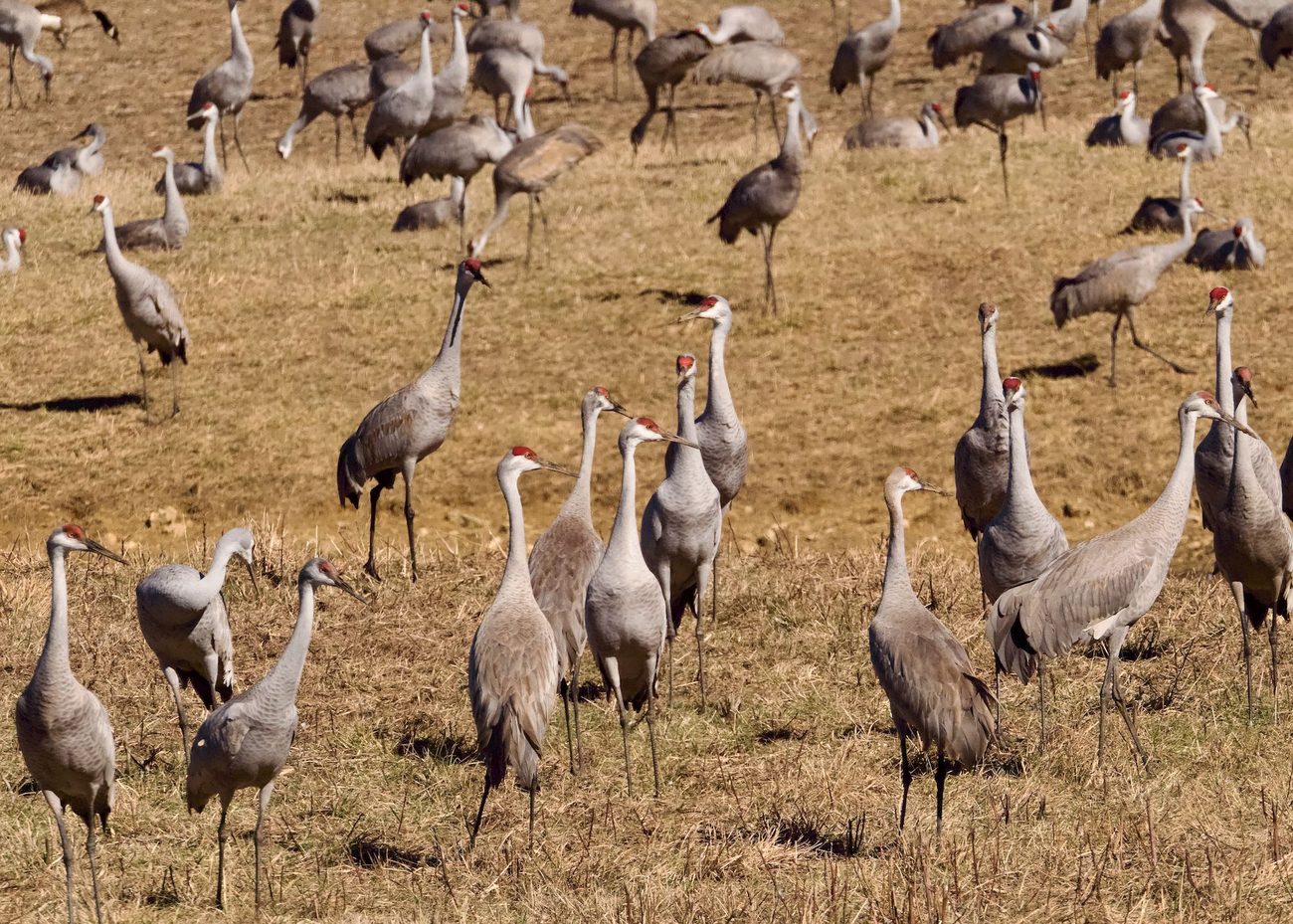
We heard the cranes before we saw them. If you have never heard sandhill cranes, the sound is a rolling, rattling call, like someone running a stick along a wooden fence, multiplied by a few thousand. Harper stopped on the path and pulled the scarf down to ask, "Is that them? All of that?"
It was all of that.
The observation building
The refuge is about ten minutes from our house, on the east side of Decatur. From the visitor center it's a short walk to the observation building, and the observation building is the reason a family like ours can do this in January: it's heated. There's a long wall of big windows looking out over the fields and the water, spotting scopes set up at the glass and benches for people who plan to stay a while. You can watch thousands of cranes from a warm room with your coat unzipped. I don't know a better deal in North Alabama.
The cranes stand in the fields in loose gray crowds, each one about as tall as Harper's shoulder, with a patch of red on the head. Every few minutes a group lifts off, circles and comes back down, calling the whole time. Ben, who usually lasts about 20 minutes in any museum, stayed an hour and a half.
We had borrowed binoculars from Carol, Ben's mom, who bought them years ago for a birding class and used them twice. They were better than the scopes for following one bird at a time. Harper used them to track what she decided was the same crane over and over, and she named it Gerald.
It was also festival weekend. The annual cranes festival had events at the refuge and around downtown Decatur, and by 10 the building was full: a volunteer at the windows answering questions, serious photographers with lenses as long as my arm and a lot of families who'd had the same idea we did. Somebody asked about whooping cranes, the rare white ones that sometimes winter here with the sandhills. The volunteer told us to watch the far edge of the field. We watched. We didn't find one, and Harper has added it to her list for next year.
On the way home we stopped at the Cook Museum downtown, which had a festival event and free admission that Saturday. Harper spent an hour there, then fell asleep on our couch at 1:30 with her socks still on. Moose, who had been left home with strong opinions about it, climbed up and slept on her feet.
When to go, and one tip
The cranes spend the winter at Wheeler, roughly from late fall into February, and January is usually the big month. Go in the morning, when the birds are busy and the building is quieter. Festival weekend is fun if you want talks and a crowd. Any other January Saturday is calmer, and the cranes don't know the difference. The building is free, which is the best price on this whole blog.
The tip: dress for the walk, not for the building. Inside is warm, but the walk from the parking lot and any time you spend on the path outside are cold, and 30 degrees with wind coming off the water feels like less. Bring binoculars if you own a pair or can borrow one. And if you see a donation box, use it. A free building with heat and scopes doesn't run on nothing.
What it cost
- Gas: about $3
- Refuge and observation building: free
- Donation box: $10
- Sausage biscuits made at home and a thermos of cocoa: about $5
- Cook Museum: free that day
- Binoculars: borrowed, so free, though Carol now expects a full report
Total: about $18. For thousands of cranes, a heated room to watch them from and a kid who talked about Gerald for the rest of the week, it was the best $18 we spent all month.